Cover image: AI-generated FreshSTL concept artwork. It illustrates a design direction, not a tested physical print or a guarantee of available options.
The most memorable Halloween display is not necessarily the one with the most objects. A clear theme, a consistent scale and one character with personality can make a small shelf feel intentionally designed.
FreshSTL's Halloween artwork explores bats, witch cats and pumpkin-inspired dragons. These ideas are useful starting points for planning a display, while the current product pages remain the source for release status and included files. At publication, Nox, Hex and Ember are described as concepts in development.
Idea 1: A friendly bat desk companion
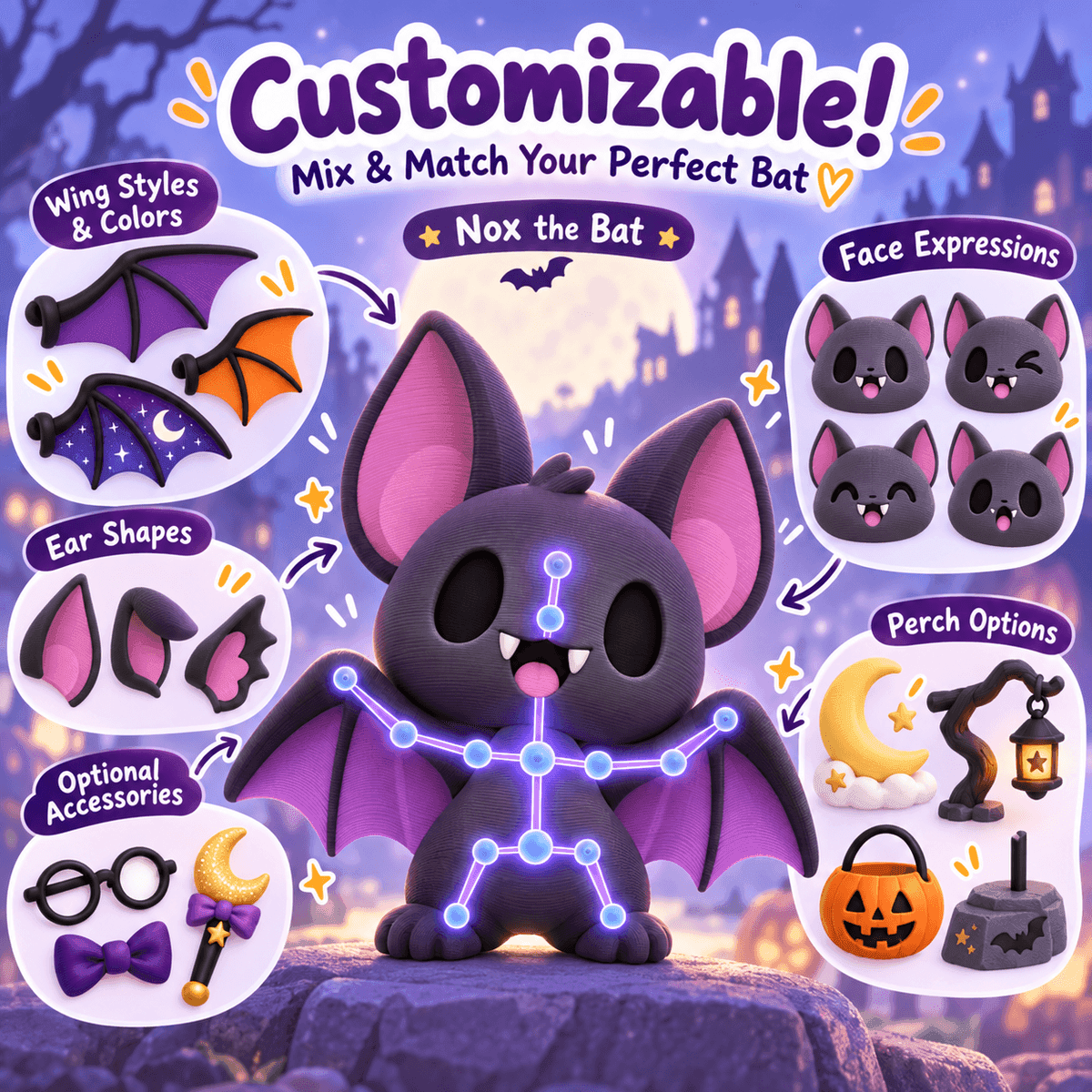
A bat character can lean playful rather than frightening. Think about an expressive face, a compact pose and a clear outline. For a desk, the practical question is where the wings and accessories will sit relative to your keyboard, notebook or lamp.
The Nox concept explores that friendly direction. If you are planning a future print around a bat, measure the available width as well as the height. Wings can make a seemingly small character occupy a surprising amount of space.
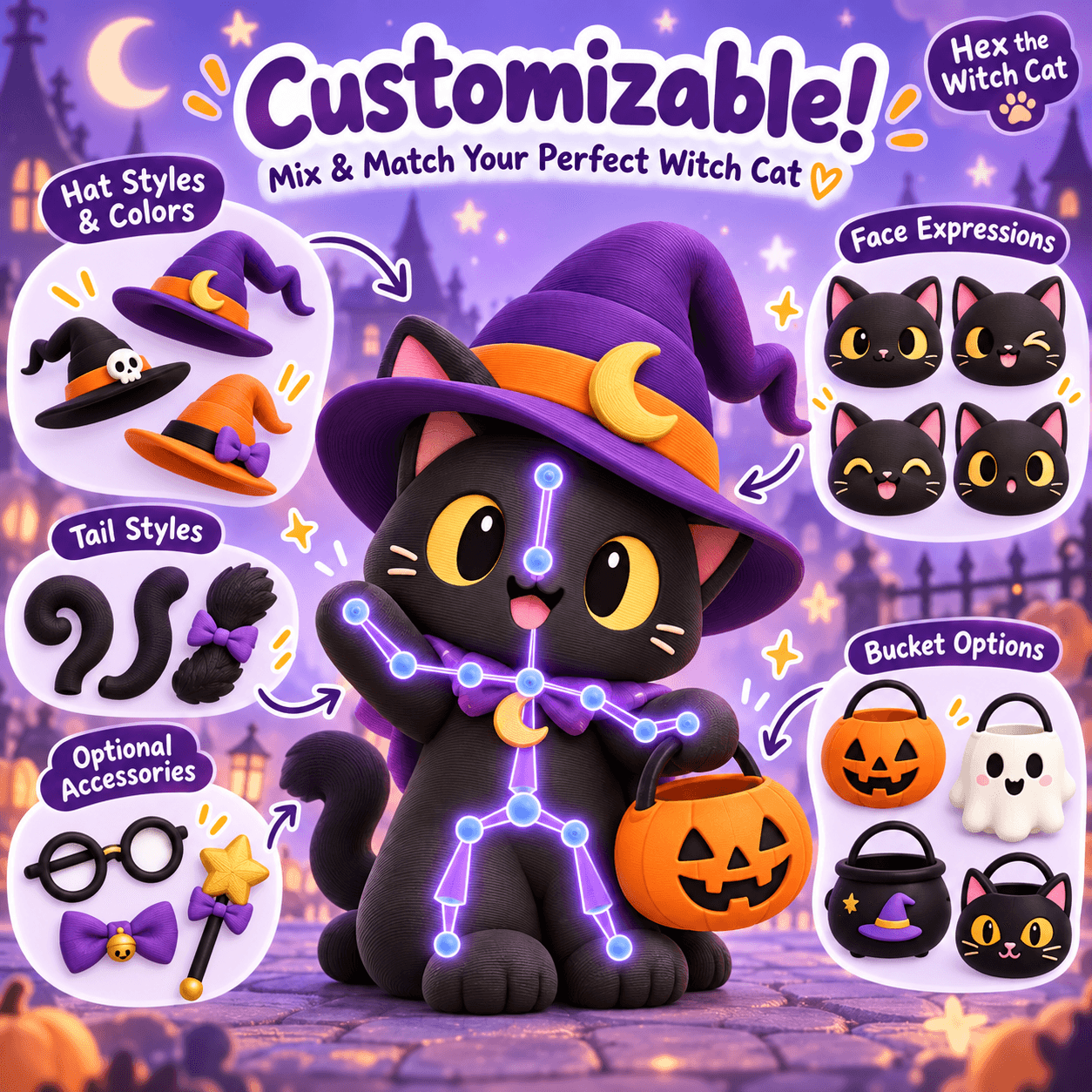
A cat, a book and a restrained autumn palette can create a Halloween corner without turning the entire room into a prop collection. Choose one main visual feature, such as a hat silhouette, and keep the surrounding items quieter.
Hex is FreshSTL's witch-cat concept. Its artwork shows possible accessories and expressions. Treat these as design ideas while the product remains in development, rather than as a checklist of released printable variations.
A long creature can create movement across a display without needing a tall pedestal. Sketch a curved footprint on paper before committing to a size. Make sure it leaves room for the other objects and does not overhang a narrow shelf.
The Ember concept combines pumpkin forms with a segmented dragon silhouette. Its appearance suggests a different display role from a standing character: a low centerpiece that leads the eye across the arrangement.
Check the Ember concept page for future release details, joint design and supported sizes. The artwork alone does not establish print-in-place functionality.
Idea 4: A coordinated pair instead of a crowded set
Choose two characters that share one visual feature, such as an orange accent or a rounded shape. Give them different heights or roles so they do not compete. One can be the focal point and the other a smaller companion.
This approach also makes the printing project manageable: finish and evaluate one object before starting the second. You can adjust the final palette after seeing the real material under the lighting of the display area.
Plan colors as a production choice
The colors in concept art are styling references. Decide whether your actual result will come from a single filament, separately colored parts, painting or a supported multicolor process. Do not infer that a color boundary in an illustration corresponds to a separate downloadable part.
For a cohesive shelf, start with a small palette you can reproduce consistently. Test the main color on a small sample before building the entire display around it.
Leave time for the physical project
Work backward from when you want the display ready. Include model availability, one test print, cleanup and any finishing or assembly. A concept whose release date is unconfirmed should remain inspiration, not the only plan for a fixed deadline.
Are the Halloween concepts shown here tested printable releases?
The Nox, Hex and Ember descriptions currently identify them as concepts in development. Check their current product pages for confirmed releases and printing instructions.
Do I need a multicolor printer for a Halloween display?
Not necessarily. A single-color print or a painted finish can work. Separate colored parts depend on what the actual model provides.